Product Overview
Servo Drive & Motion Control
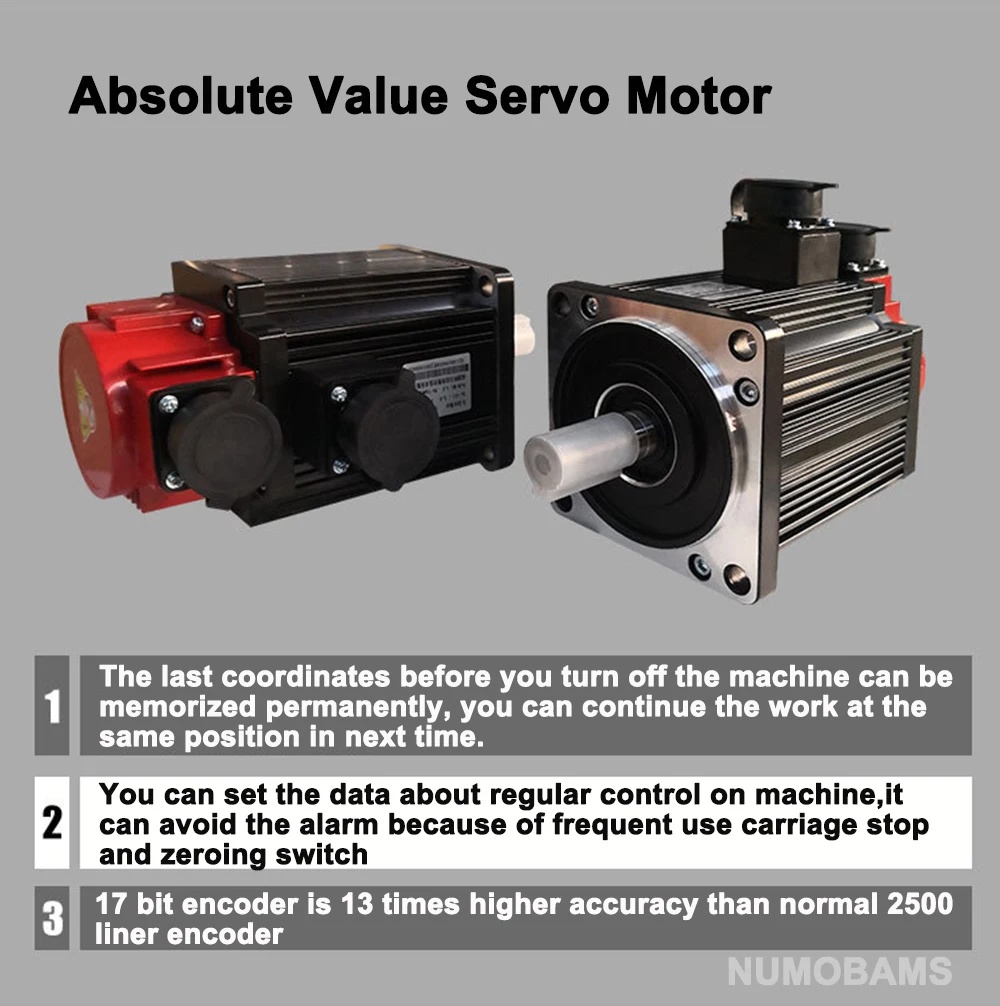
- Absolute value means the machine remembers. The absolute value servo motor stores the last coordinates permanently, so after a power-down the machine can carry on from the same position instead of re-homing every axis before the first cut.
- That changes how a batch is run. Stopping mid-program on a CNC lathe for lunch, a tool check or an overnight break no longer costs a re-setup; you resume the program where you left it.
- The drive is what separates machines. When buyers compare CNC lathe manufacturers, spindle power is the number on the front of the brochure, but the drive is what decides how the machine behaves cut after cut.
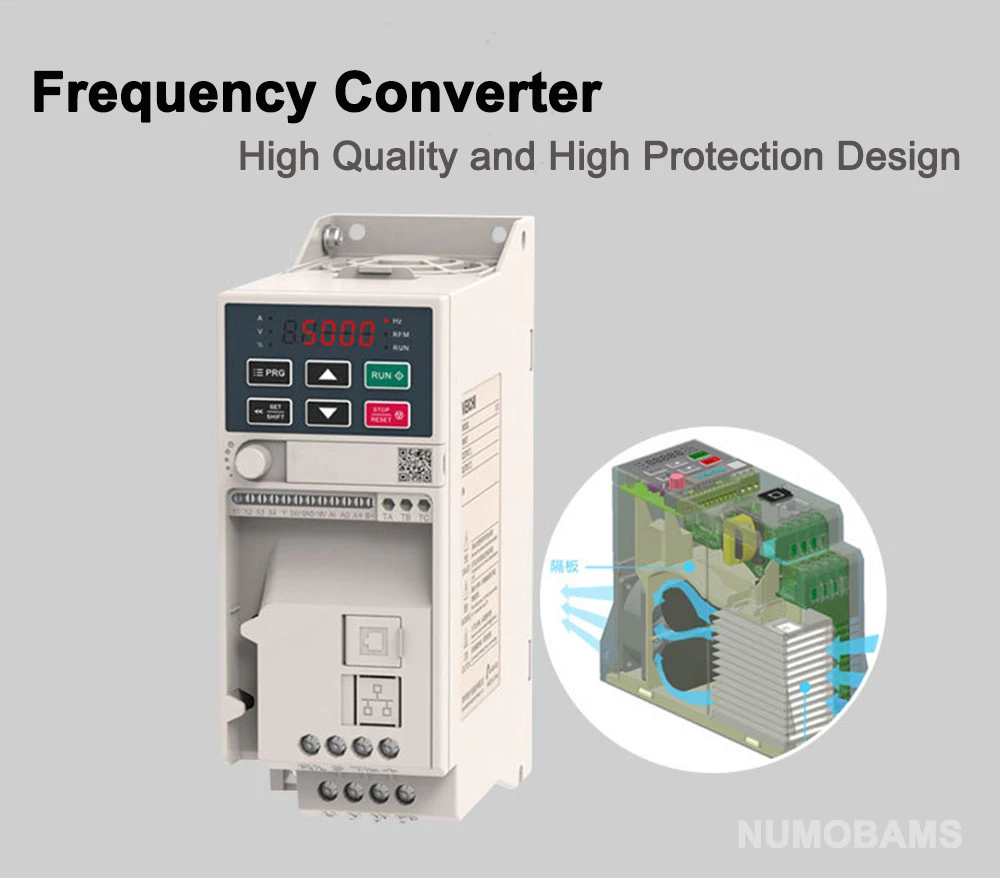
- A frequency converter manages spindle speed, so you can set the surface speed that suits the material and the insert instead of working around fixed steps.
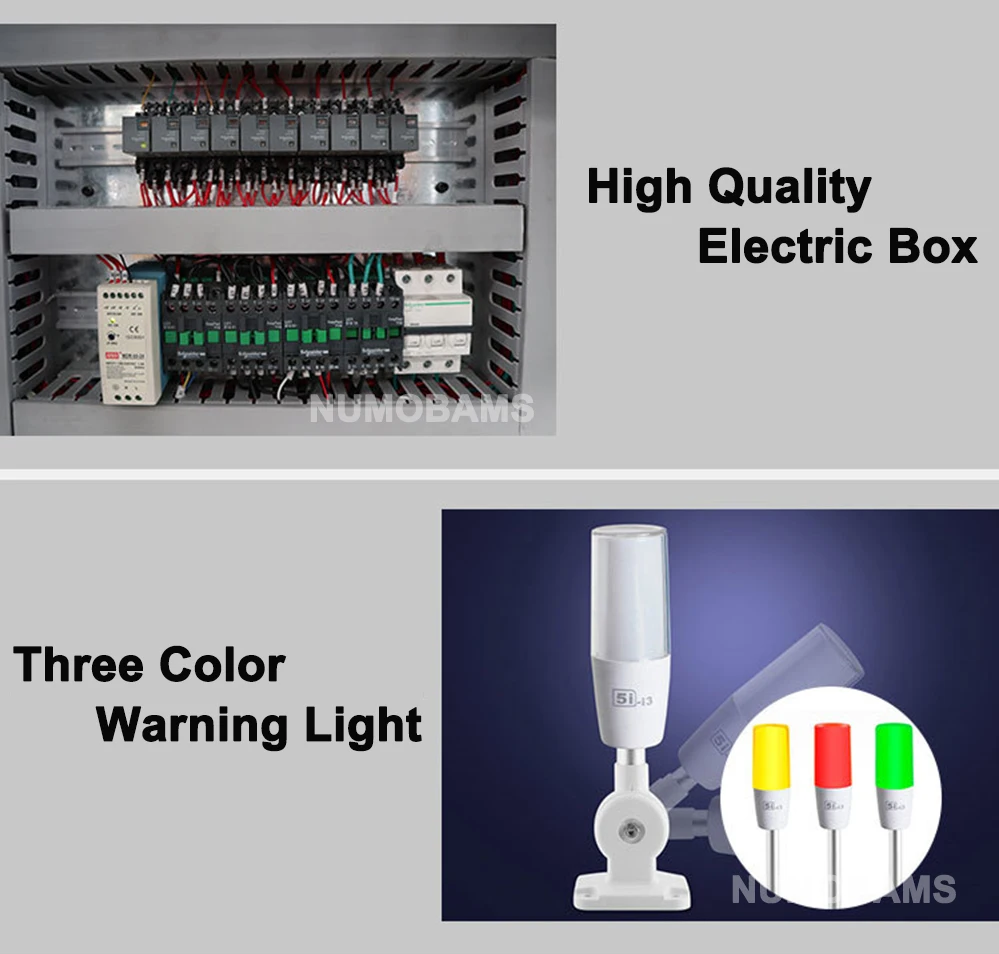
- The electrical cabinet is sealed against oil, dust and coolant, with the control circuits running at safe voltage. Coolant mist and fine chips are the usual reason a control board fails in a busy shop, which is why the cabinet is closed rather than louvred.
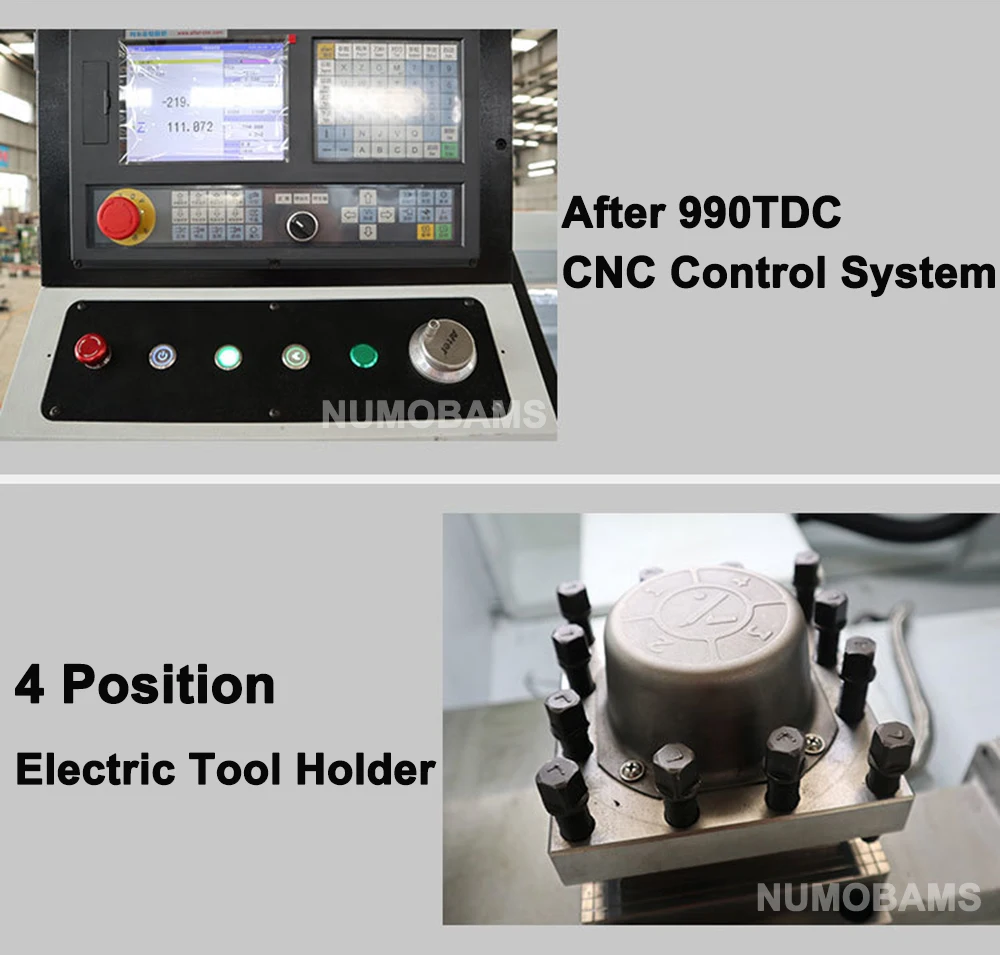
- The panel is laid out for gloved hands: display screen, keypad and rotary controls, with dedicated PRG, RUN, SET, SHIFT, STOP and RESET keys plus a separate ON/OFF POWER and PAUSE START position.
- Repeated routines can be stored on the machine, so routine carriage-stop and zeroing work does not set off nuisance alarms during a long run.
Workholding & Tooling
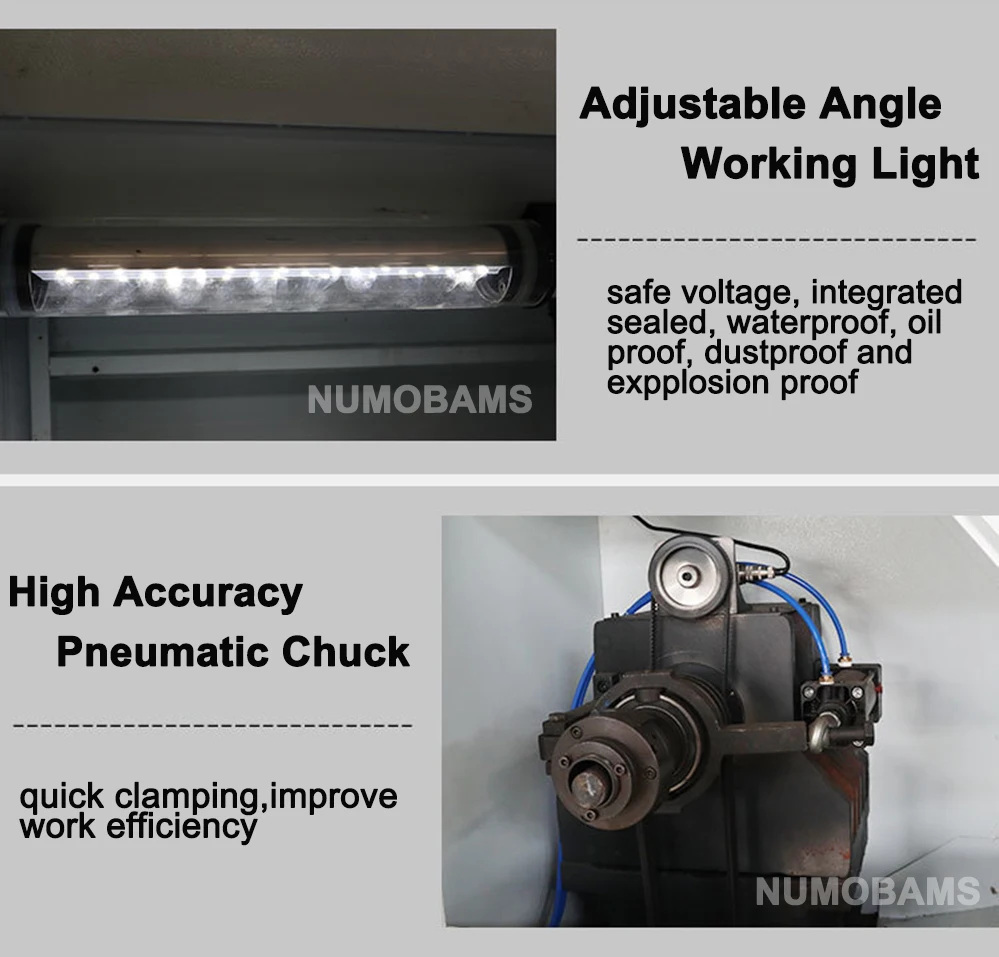
The workpiece is held in a pneumatic chuck, which clamps from the control instead of by turning a key by hand. On a batch that is worth more than it sounds: even clamping force from the first part to the last, no operator fatigue at part fifty, and a changeover that takes seconds.
Cutting tools sit in a four-position electric tool holder with an adjustable angle. It indexes on command, so the tool sequence for a part lives in the program rather than in the operator's memory. The working light and the segmented coolant hose are aimed at the cutting zone, and moving the hose between a roughing pass and a finishing pass takes a moment.
Workholding is where metal lathe manufacturers tend to economise, because cost is easy to shave out of a chuck or a tool block and hard for a buyer to spot on a specification sheet. A chuck that clamps from the control and a holder that indexes itself are the two items that decide how much of the cycle is actually spent cutting.
Specifications
| Item |
Specification |
| Machine type |
Enclosed CNC lathe with sliding front door |
| Main drive |
3 kW absolute value servo motor |
| Control system |
After 990TDC CNC control |
| Position memory |
Retained after power-off |
| Tool holder |
4-position electric, adjustable angle |
| Workholding |
Pneumatic chuck |
| Coolant supply |
Segmented hose, positionable nozzles |
| Working light |
Integrated, adjustable |
| Control panel |
Display screen, keypad, rotary controls |
| Panel keys |
PRG, RUN, SET, SHIFT, STOP, RESET, ON/OFF POWER, PAUSE START |
| Electrical cabinet |
Sealed against oil, dust and coolant |
| Programming |
CAD/CAM-ready control with real-time monitoring |
| Installation |
Floor-standing base with levelling feet |
Engineered for Accuracy and Endurance
Accuracy on a lathe is not a single feature, and it is not something CNC lathe manufacturers can bolt on at the end of a build. It is a frame that stays still under load, components that hold their fit, and a drive that returns to the same position every time it is asked. This machine is built on a reinforced structure with high-grade components, assembled so that vibration from a heavy or interrupted cut is damped before it reaches the cutting edge — which is what stops a roughing pass from turning into a finish problem two operations later.
As an industrial metal lathe, it is expected to run shifts rather than minutes. The drive and control package is built for continuous operation, and the sealed cabinet keeps the electrics away from the coolant and dust that shorten the life of an open machine. Maintenance stays simple for the same reason: less to clean out, and fewer exposed parts to go wrong.
There is a commercial side to that. A machine that holds its accuracy needs fewer re-cuts, fewer scrapped parts and less operator time spent chasing a dimension that has drifted. The servo system also draws only the power the cut needs, so running costs stay in proportion to the work being done rather than to the hours the machine is switched on — which matters most in a shop running two or three shifts.
CAD/CAM Integration & Programming
- Built to talk to the software you already run. The control connects to a broad range of CAD/CAM software, so programs can come out of your existing CAM seat instead of a proprietary package.
- Integration covers more than geometry. Automated workflows and real-time monitoring run alongside the program, so the machine reports what it is doing instead of leaving the operator to guess.
- New operators get productive quickly. The interface is deliberately plain — display screen, keypad, rotary controls — with the steps in front of the operator rather than buried three menus deep.
- The absolute value drive supports the workflow. Because position is retained, a program can be stopped and resumed without re-datuming, which is what lets one operator look after more than one machine.
- Store the routines you repeat. Regular working data can be held on the machine, so the same job can be called up next month without rebuilding the setup from notes.
- A CNC lathe machine like this one is meant to grow with the shop. The design supports upgrades and customisation as your work changes, which costs far less than replacing the machine when the next contract arrives.
Applications
- Job shops running repeat families of parts. Shafts, bushes, spacers and pins that come back in batches: the tool holder and chuck turn each batch into a program rather than a series of manual steps.
- Repair and maintenance workshops. Jobs arrive one at a time and rarely repeat, so a machine that sets up quickly and clamps from the control keeps a repair bench moving instead of tying it to a chuck key.
- Prototype and development cells. Drawings change between iterations; a CAM connection means a revised model can go straight onto the machine instead of being re-plotted onto a manual machine.
- Shops stepping up from a manual lathe. The turning knowledge carries over; what changes is that the tool change and the feed live in the program, so attention goes to the first part rather than every part.
- As an industrial metal lathe, it also takes the larger workpiece. The build is aimed at heavy-duty and high-volume work as well as precision components, so one machine covers small and mid-size parts.
- Subcontract and overflow work. When a customer sends a batch that will not fit the schedule, a CNC lathe machine that holds its position between power cycles can run on a second shift with far less setup.
Ordering & Delivery
- Send us the job. Material, finished sizes, batch size and the tolerance you work to are enough for us to say whether this machine suits the work.
- Confirm the configuration. Control system, tooling package, jaw set for your bar stock and any tailored options your production needs — we build to the order, so changes are easier before the machine is scheduled.
- Check the software side. Tell us which CAM system you use and CAD/CAM integration can be confirmed before the machine is built.
- Give us your site details. Supply voltage and phase, the floor space the machine will stand in, and how it will be unloaded at your end.
- Agree the delivery route. Tax-free, door-to-door delivery is available to a long list of destinations, including the US, the UK, Germany, France, Spain, Italy, Poland and most other EU markets, plus Russia, Kazakhstan, Thailand, Vietnam and Malaysia. Confirm your country and postcode with us and we will quote the right route.
- Plan the schedule. We usually dispatch within 90 days of order confirmation, and we confirm the slot for your machine once the order is placed.
- Agree payment and paperwork. Tell us what your country and your accounts department need, and we will confirm the payment methods and documents available for your order.
- Fix the support terms. Warranty, spare-parts coverage, commissioning advice, operator training and after-sales follow-up are all confirmed with your sales contact before the machine ships, so the scope is clear on paper.
- Buying more than one. If you are equipping a workshop or stocking the range as a dealer, ask for a bulk quotation covering lathes, mills, tooling and accessories on a single shipment.
- Ask for the documents. Specification sheet, operating manual and any drawings you need for site planning are available on request.
Supply Chain & Delivery Assurance
NUMOBAMS is a China-based machinery trading company working from Changsha, Hunan, with a selected network of manufacturing partners built up since 2016. That position lets us consolidate a full workshop order — machines, tooling and spare parts — into one shipment, inspect and prepare each unit before dispatch, and keep spare parts available long after delivery. We ship to Europe, the US and Canada on a tax-free, door-to-door basis, and usually dispatch within 90 days of order confirmation.
FAQ
Q1. What does an absolute value servo motor actually do for me?
It remembers. The last coordinates are stored permanently when the machine is switched off, so the next session starts from the same position instead of re-homing the axes. In practice a lunch break, a tool change or an overnight stop becomes a pause rather than a re-setup, and a job you ran last month can be picked up again without re-datuming the machine.
Q2. Is this machine built for production runs or one-off work?
Both, but it is most effective on repeat work. The structure and drive package are aimed at continuous operation, and the enclosed cabinet keeps the machine working in a shop where coolant and chips are part of the day. As an industrial metal lathe it will hold a batch for a whole shift, and the payoff grows when the same family of parts returns, because the program and the setup are already there.
Q3. How much training does an operator need?
A machinist who already turns parts is normally cutting within a day. The control is laid out with a display screen, keypad and rotary controls, and the common functions have their own keys, so nobody hunts through menus for STOP or RESET. Someone who has never run a CNC lathe should plan on longer: the turning knowledge is the same, but the program, the tool offsets and the way a cycle is proved out are new. Talk to us about the first programs if that helps your operator settle in.
Q4. How is the workpiece held, and how fast is a changeover?
The machine uses a pneumatic chuck, so clamping is done from the control rather than with a chuck key. That gives even clamping force on every part in the batch and a changeover measured in seconds. Jaw sets are matched to the bar or billet you run — tell us the size range and we will confirm the right set with the machine.
Q5. Will it take programs from the CAD software we already use?
Yes. The control is built to connect to a broad range of CAD/CAM software and to automated workflows. CAD/CAM integration means you post from the seat you already pay for, and the machine reports back in real time while the program runs, so a wrong feed or a missed tool shows up early instead of at the inspection bench.
Q6. How many tools can it hold?
Four, in a 4-position electric tool holder with an adjustable angle. The holder indexes under program control, so the tool sequence is part of the setup rather than a manual step between operations. Holder and shank compatibility is one of the details metal lathe manufacturers vary most on, so send us the tooling you plan to run and we will confirm the block suits it before the machine is built.
Q7. What power supply does it need?
That depends on the configuration you order, and it is not something to guess at. Send us the voltage, phase and frequency your workshop runs on and we will confirm what is available for your build; if your supply is unusual, tell us early, because changing the electrics after the machine is built costs far more than specifying it correctly at the start.